
The 10-Slide Pitch Deck Structure That Raised Over $1 Million

Most investors see hundreds of decks a year. They do not read every slide. They scan, form an opinion fast, and decide if the deck earns a longer look.
That is why structure matters. A clear order helps an investor follow your story without effort. A messy order makes them work, and most won’t.
The structure below follows the flow used in many seed-stage decks, including decks from founders who closed rounds above $1 million. It is not a guarantee. Funding depends on your traction, your team, and your market. But a strong structure gives your business a fair shot at being understood.
Why 10 Slides Work?
Ten slides keep you disciplined. You can present them in 10 to 15 minutes and leave time for questions. Each slide answers one question an investor is already asking.
Shorter decks also get read. Email-first decks, the kind investors open on their phones, need to make sense without you in the room. Ten focused slides do that well.
The 10-Slide Pitch Deck Structure
Slide 1: Title and One-Line Pitch
Keep this slide simple. Show your company name, logo, and one sentence that explains what you do.
Write that sentence for a stranger. “We help small clinics book patients faster with automated scheduling” works. “We are disrupting healthcare”.

Slide 2: The Problem
Describe the pain your customer feels today. Use one clear example or one number.
Investors fund problems that are real and costly. If you can show who has the problem and what it costs them, you are already ahead. Avoid listing five problems. Pick the biggest one.
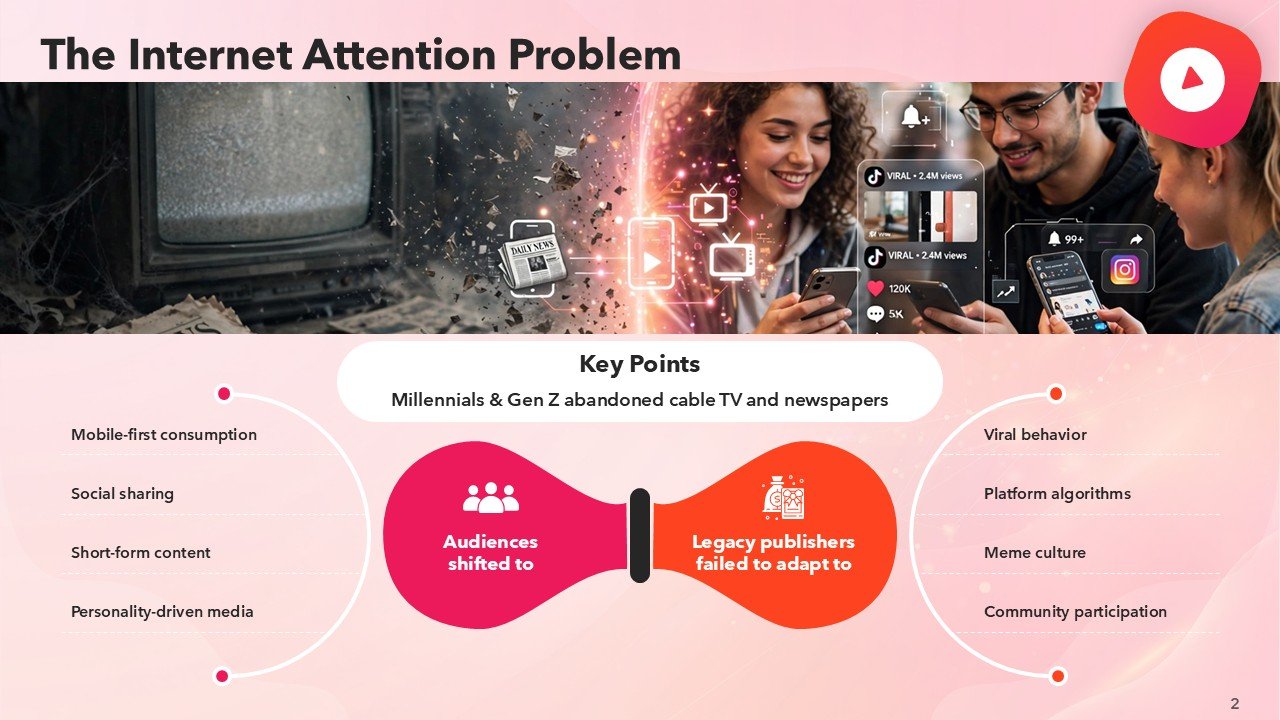
Slide 3: The Solution
Now show how you fix it. Connect your solution directly to the problem on slide 2.
Explain the value in plain words. What changes for the customer? Do they save time, cut costs, or earn more? Keep the technical details for later. For instance, Green tech startups, eco-friendly consumer product brands, renewable energy ventures, sustainability consultants, and social enterprises looking to raise capital or pitch to impact investors can use our ultimate sustainability pitch deck PPT template.
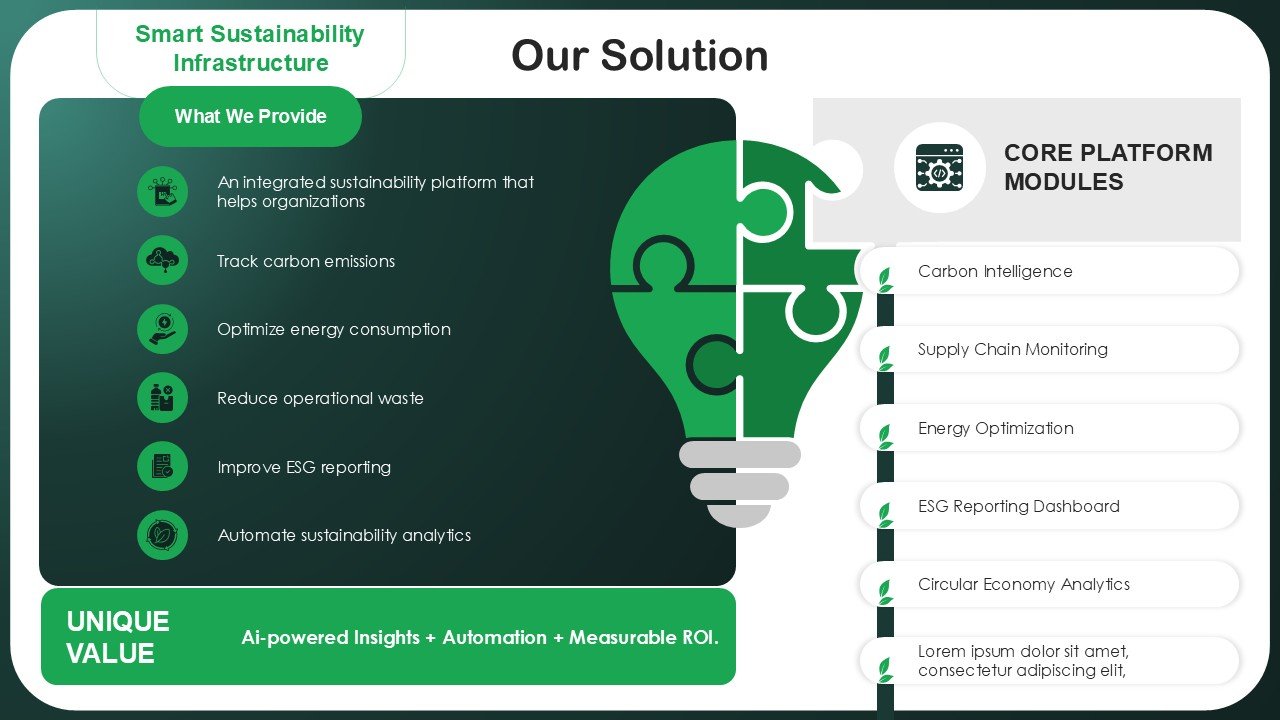
The template defines the solution slide as a dedicated space to showcase your unique product, service, or business model, explaining clearly how your offering directly resolves the environmental or social problem previously highlighted in the pitch.
Slide 4: Product
Show the product. A screenshot, a short demo flow, or a simple diagram is enough.
This slide proves the solution is real. If your product is still early, show a prototype and be honest about the stage. Investors respect clarity more than polish.
You can use this PPT to raise capital or pitch to impact investors Automobile Manufacturing Business Plan Presentation PPT and Google Slides

Slide 5: Market Size
Show how big the opportunity is. Most decks use TAM, SAM, and SOM: the total market, the part you can serve, and the part you can realistically win.
Use credible sources and bottom-up logic where you can. A market estimate built from real customer counts and prices is more believable than a huge number pulled from a report headline and you can use our Premade PPT Template Premium Beauty Brand Pitch Deck Presentation PPT and Google Slides

Slide 6: Business Model
Explain how you make money. State your pricing, your revenue streams, and your average revenue per customer.
Keep it short. Investors want to see that the math can work at scale.

Slide 7: Traction
This is often the most important slide. Show proof that people want what you built.
Good traction can include revenue, active users, pilot customers, waitlist size, or growth rate. Use a simple chart. If you are pre-revenue, show early signals such as letters of intent or interview results. Only include numbers you can back up.

Slide 8: Competition
Show who else solves this problem and how you are different. A simple 2×2 matrix or comparison table works well.
Do not claim you have no competitors. Investors will read that as a lack of research. Instead, explain what makes your approach stronger or different.

Slide 9: Team
Show who is building this and why they are the right people. Include roles, relevant experience, and any past wins.
Early-stage investors often bet on the team first. Keep each bio to one or two lines that connect to the problem you are solving.

Slide 10: Financials and the Ask
End with your projections and what you are raising. State the amount, what the money will fund, and the milestones it will help you reach.

For example: “We are raising $1.2 million to reach 500 customers and launch in two new regions over 18 months.” That is specific and easy to evaluate. Please find this PPT.

For example: “We are raising $1.2 million to reach 500 customers and launch in two new regions over 18 months.” That is specific and easy to evaluate. Please find this PPT.
Quick Reference Table
Slide | Purpose | Key Question Answered |
1. Title | Introduce your company | What do you do? |
2. Problem | Show the pain | Why does this matter? |
3. Solution | Present your fix | How do you solve it? |
4. Product | Make it real | What does it look like? |
5. Market | Size the opportunity | Is this big enough? |
6. Business Model | Explain revenue | How do you make money? |
7. Traction | Offer proof | Is it working? |
8. Competition | Position yourself | Why you? |
9. Team | Build trust | Who is behind this? |
10. Ask | Close the pitch | What do you need? |
SidesBrain’s Guy Kawasaki 10 20 30 Rule Pitch Deck Template For Perfect Presentation
The Guy Kawasaki 10/20/30 Rule Pitch Deck on SlidesBrain is a premium, ready-to-use presentation template designed for startups and entrepreneurs looking to pitch to investors.

Key Details:
- Built around Guy Kawasaki’s 10/20/30 rule for clear and concise presentations (10 slides, 20 minutes, 30-point minimum font size).
- Contains 15 slides in a 16:9 widescreen format.
- Fully customizable in both Microsoft PowerPoint and Google Slides, allowing you to easily adjust text, colors, images, and branding.
Common Mistakes to Avoid
Even with the right structure, a few habits can weaken your deck.
- Too much text. Slides are a visual aid, not a document. Keep one idea per slide.
- Weak design consistency. Mixed fonts and colors make a deck look rushed. Use one style throughout.
- Vague numbers. “Growing fast” means little. “Grew 18% month over month for six months” means something.
- Skipping the ask. Always state how much you need and why.
- Overloading slides with charts. One clean chart beats three crowded ones.
How to Build This Deck Faster With SlidesBrain
Knowing the structure is one thing. Building clean slides is another. Many founders lose days fixing layouts instead of sharpening their story.
SlidesBrain makes this part easier. Its pitch deck templates follow the same flow covered above, so you can fill in your content and move on. Every template is fully editable in PowerPoint and Google Slides.
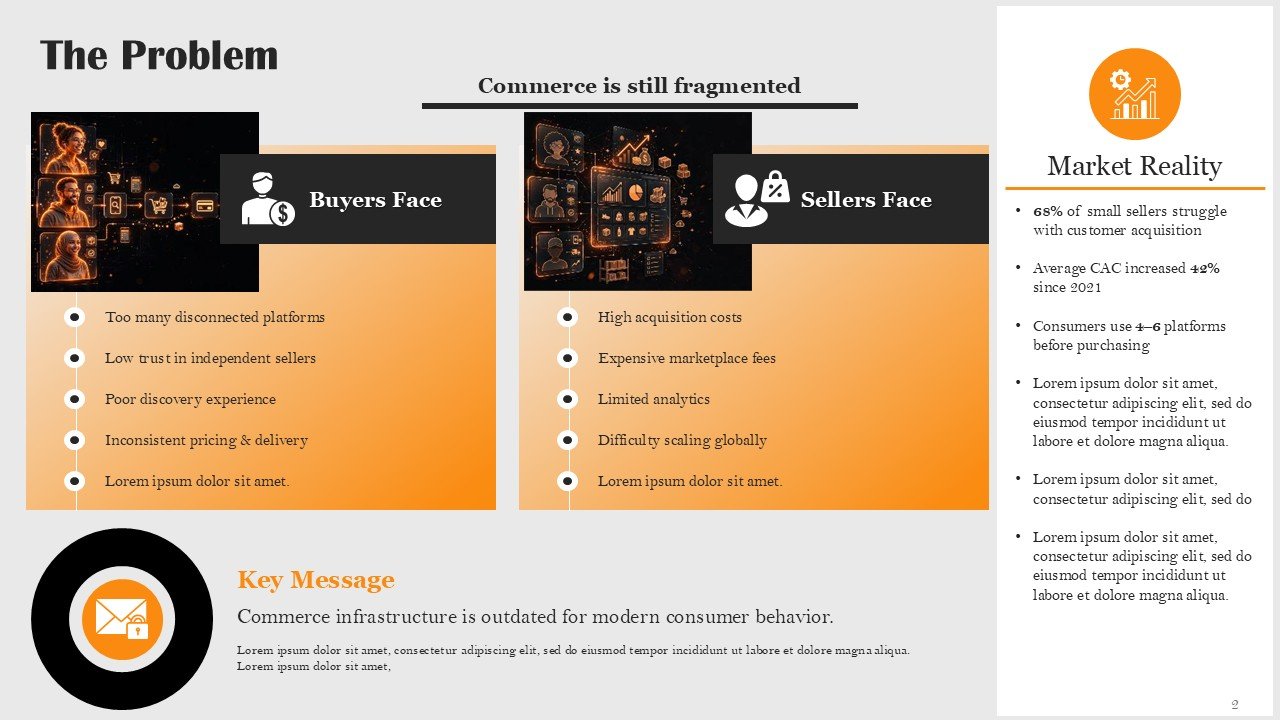
- Structure: Start with a ready startup pitch deck template that already includes the problem, the solution, traction, and ask slides. Pick our best investor pitch deck templates to build your presentation.For instance, you can choose the startup marketplace pitch deck PPT template and Google Slides. This template covers 10+ slides in 100% editable format. You can define your problem defining slides and then proceed with solution tracking effortlessly.
- Data slides: Use chart and graph slides to show traction and financials clearly. Alternatively, try our Stripe pitch deck PPT PowerPoint and Google Slides template.

- Market size: Try the TAM, SAM, and SOM slide templates to present your market opportunity in a clean visual.
- Competition: Use a comparison matrix template to position yourself against alternatives.
- Speed: The SlidesBrain AI PowerPoint generator can create a first draft from your outline, which you can then refine.
SlidesBrain is a strong first stop if you want a professional-looking deck without starting from a blank slide.
A Simple Checklist Before You Send Your Deck
Run through these before you hit send:
- Can a stranger understand your business from slide 1?
- Does each slide answer one clear question?
- Is every number sourced or easy to defend?
- Does your ask include an amount, a use of funds, and milestones?
- Is the design clean and consistent?
- Can the deck stand on its own if you are not there to explain it?
If you can answer yes to all six, your deck is in good shape.
Final Thoughts
A strong pitch deck is not about fancy design or big claims. It is about a clear story told in the right order. The 10-slide structure gives you that order. Fill it with honest numbers, a focused message, and clean visuals.
Start with the structure. Then use a tool that saves you time on design. Explore SlidesBrain’s pitch deck templates and build a deck you feel confident sending.
Frequently Asked Questions
How many slides should a pitch deck have?
Most seed-stage pitch deck have 10 to 15 slides. Ten is a strong target because it keeps the story tight and fits a short meeting.
What is the most important slide in a pitch deck?
Many investors focus on traction and team. Traction shows the business is working, and the team shows who can make it grow. Still, every slide supports the story, so none should be skipped.
Does a pitch deck guarantee funding?
No. A good deck helps investors understand your business, but funding depends on your market, traction, team, and timing. The deck opens the door. The business has to do the rest.
What order should pitch deck slides go in?
A common order is title, problem, solution, product, market, business model, traction, competition, team, and the ask. You can adjust it slightly. For example, some founders move traction earlier if it is their strongest point.
Can I build a pitch deck in Google Slides?
Yes. Both Google Slides and PowerPoint work well. SlidesBrain offers pitch deck templates for both, so you can choose the tool your team prefers.