
Pre-Seed vs. Seed Pitch Decks: Key Differences & What VCs Expect

Quick answer: A pre-seed pitch deck sells a vision; it leans on founder credibility, problem validation, and market size because there’s little to no traction yet. A seed pitch deck sells proof; it leans on early revenue, user growth, and unit economics because investors now expect evidence that the vision is working. The core shift between the two rounds is simple: pre-seed answers “why you”, seed answers “why this is working.”
Why This Question Keeps Coming Up
Search around founder forums, and you’ll find the same confusion over and over. One founder had a product and free users but no paying customers and couldn’t tell whether they were “still pre-seed” or “already seed”. They’d heard that seed is about finding product-market fit but thought pre-seed was supposed to be about that too, and honestly, that mix-up is completely understandable, because the line between stages has blurred over the last few funding cycles. Rounds have gotten smaller, timelines longer, and investors more selective. Getting the deck wrong at either stage doesn’t just cost you a meeting; it costs you the meetings you never get invited to.
Pre-Seed: You're Selling Belief, Not Data
At pre-seed, you’re almost always working from a prototype, a hypothesis, or a handful of early signals, not a business with numbers to defend. Pre-seed investors back founders before product-market fit exists. They’re essentially pattern-matchers trying to judge whether you see something others have missed and can actually execute on it.
That changes the entire architecture of the deck. Because pre-seed is defined by narrative strength rather than traction metrics, the strongest decks at this stage lead with vision, not data visualization. Practically, that means:
- The team slide moves up front. It often lands on slide two or three instead of being tucked near the end, because investors are evaluating you and your co-founders as much as the idea itself.
- Traction is replaced by validation signals. Waitlists, letters of intent, pilot agreements, and 30+ customer interviews stand in for revenue.
- Market sizing has to do heavier lifting, since there’s no usage data to prove the market wants this yet.
The money and mechanics back this up. The typical pre-seed raise falls between $150K and $1M, with the median pre-seed SAFE landing around $700K and dilution typically running 10-15%. Interestingly, nearly half of pre-seed rounds, roughly 45%, closed under $250K. Recently, a trend toward smaller initial checks has been building since 2023. Smaller rounds mean investors are taking smaller bets faster, which puts even more pressure on your deck to make its case in the first few slides.
And you genuinely have very few slides to work with. Investors spend an average of just two and a half minutes reviewing a pre-seed pitch deck before deciding whether to take a meeting, and more recent research puts that window even tighter in the coming years. Investors were averaging about four minutes and ten seconds per deck before deciding whether to engage, despite thousands of decks crossing their desks every year. Either way, the takeaway is the same: your opening slides are doing almost all the work.
Seed: You're Selling Proof, Not Just Potential
By the time you’re raising a seed round, the questions change. Investors no longer want to know if the problem is real. They want to know if you’ve already started solving it and whether people are paying you for that.
A seed round typically raises between $500K and $3M, and the deck emphasis shifts to traction and unit economics, backed by real metrics like paying customers and MRR growth rather than the softer validation signals that carried a pre-seed deck. This is the round where slides like customer acquisition cost, retention curves, and early revenue trajectory stop being “nice to have” and start being expected.
The practical effect on the deck itself:
- The team slide still matters, but it’s no longer the star. It supports the traction story instead of carrying it.
- The market and product slides get more rigorous. Vague TAM slides don’t hold up once you have real usage data to anchor them.
- Financials become forward-looking, not just aspirational. Investors expect a credible 12–18 month model built on actual early numbers, not guesses.
Side-by-Side: What Actually Changes Between the Two Decks
Element | Pre-Seed Deck | Seed Deck |
|---|---|---|
Core question answered | Why you, why now | Why this is already working |
Typical raise | $150K–$1M | $500K–$3M |
Key evidence | Founder-market fit, waitlists, LOIs, pilots | Paying customers, MRR growth, retention |
Team slide position | Early (slide 2–3) | Supporting, later in the deck |
Market slide | Broad TAM/SAM/SOM narrative | Data-backed, tied to real traction |
Financials | Illustrative, directional | Grounded in early actuals |
Investor review time | ~2.5–4 minutes on average | Similar or slightly longer, with more scrutiny per slide |
What VCs Actually Expect Beyond the Slides?
Here’s something the templates rarely tell you! Investors aren’t grading your deck in isolation. They’re pattern-matching it against every other deck at that stage they’ve seen this quarter and increasingly, against decks that actually closed. Founder-focused newsletters and VC blogs have started publishing real, funded decks side by side.
Pre-seed rounds sit next to seed, and Series B raises from the same few months specifically so founders can see what “good” looks like at each stage rather than guessing from generic advice. The gap between the pre-seed decks in those collections and the seed decks is rarely about polish. It’s about what evidence is available and how confidently the founder presents it.
A few things stay consistent no matter which round you’re in:
- Clarity beats cleverness. Investors skim first, read second. If your first three slides don’t communicate the problem, the solution, and why you, the rest of the deck may never get opened.
- Every claim needs a source. “Large addressable market” without a number, or “strong early traction” without a metric, reads as filler at either stage.
- The ask has to match the stage. A seed-sized ask with a pre-seed level of evidence is one of the fastest ways to lose credibility in a first meeting.
- Design should clarify, not decorate. A deck stuffed with animations and effects rarely outperforms one with a clean structure and a confident story. Investors are evaluating the business, not the slide craft.
Common Mistakes Founders Make Switching Stages
The most frequent error isn’t a design problem; it’s a content mismatch. Founders raising a seed round often keep the pre-seed version of their story: heavy on vision, light on numbers. Investors notice immediately, because they’re now calibrated to expect metrics.
The reverse mistake also happens: pre-seed founders overload their deck with financial projections and “hockey stick” charts that have no real data behind them, when what investors actually want at that stage is a sharp, credible story about the problem and the team solving it.
Raising A Round? Your Deck Has to Earn Its Second Meeting.
Investors skim fast. Whether you’re pitching a pre-seed idea or a seed-stage company with early traction, SlidesBrain helps you build a deck they actually finish reading. Clean layouts, sharp visuals, and a clear story put your vision, not your formatting, center stage.
Pre-seed? Lead with the problem, your team, and your unique insight. Seed? Show traction, key metrics, and a repeatable path to growth. Whatever your stage, SlidesBrain slides help you tell the right story with confidence.
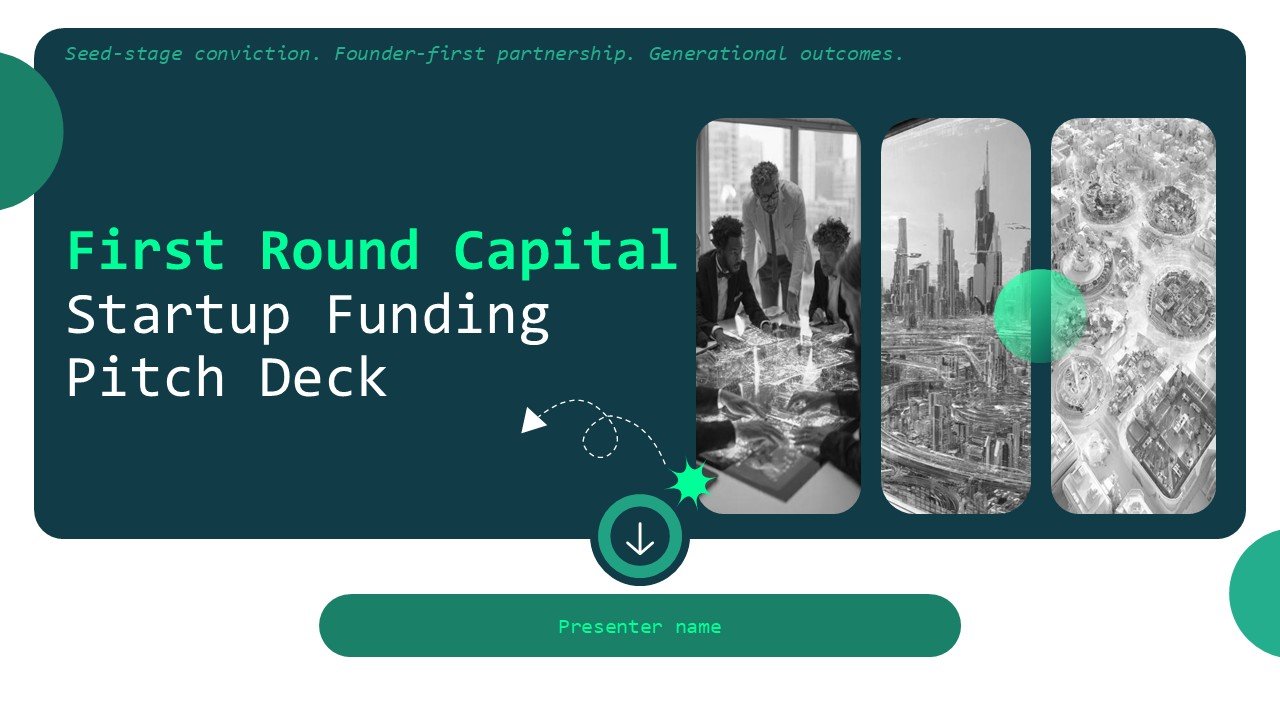
Ideal for startup companies for seed funding rounds. Skip the hours of design fiddling. Spend that time refining your pitch, rehearsing your answers, and preparing for tough investor questions.

Your next meeting could change your company. Make sure your slides are ready for it. Use the Angle Investor for a seed deck presentation specifically designed for early-stage startups seeking funding.

Fully editable slides for the business entrepreneurs to present their data in front of their investors.
Build your pitch deck with SlidesBrain today!
The Bottom Line
Pre-seed and seed decks aren’t the same document with updated numbers. They’re built to answer different questions. Pre-seed proves you’re the right person to bet on. Seed proves the bet is already paying off. Get clear on which question your round is actually asking, and the rest of the deck gets a lot easier to write.
Frequently Asked Questions
What’s the main difference between a pre-seed and seed pitch deck?
A pre-seed deck sells vision and founder-market fit because there’s little traction to show yet. A seed deck sells proof, such as real users, revenue signals, and early unit economics.
How many slides should each deck have?
Both typically run 10–15 slides. Pre-seed decks often trim further, since the story is simpler; seed decks may add one or two slides for traction and financial detail.
Do I need revenue to raise a seed round?
Not always, but investors expect some traction, such as signal paying customers, strong usage growth, or clear MRR movement even if revenue is still early.
How long do investors actually spend reviewing a deck?
On average, just a few minutes before deciding whether to take a meeting, which is why the first three to four slides carry disproportionate weight.
Should I reuse my pre-seed deck for a seed raise?
No. Rebuild the narrative around traction and metrics rather than only updating numbers on the same old slides investors will notice if the story hasn’t matured with the business.