
What is a Pitch Deck? (Complete Guide)
Introduction
A pitch deck is a short and structured presentation and is used to convey a business idea to potential investors, customers, or business stakeholders.
It uses clear and straightforward methods to convey complex concepts such as the problem, the solution, the opportunity in the market, and the potential of the finances.
What is a Pitch Deck?
A pitch deck is a visual storytelling engine that allows you to express and communicate your business idea in the best way possible, in a short amount of time.
It is in stark contrast to lengthy documents that are used to communicate the core information in the simplest of fashions using the slidiest of formats.
The goal is not to explain everything, but rather to entice and intrigue their interest.
When is a Pitch Deck Used?
There are several cases in which pitch decks are used and one of the core focuses is clear communication.
These are some common examples:
- Startup fundraising
- Investor meetings
- Business proposals
- Business presentations
- Partnership discussions
What Is the importance of A Pitch Deck?
A pitch deck that is well crafted, well designed, and well thought-out can influence your audience and persuade them in a more positive way and bring to them new ideas that they would not have considered prior to your pitch.
You can:
– Present your idea more accurately.
– Keep your audience interested.
– Build trust and credibility.
– Increase the chance of obtaining approval or funding.
Your pitch deck is, oftentimes, the first and only first impression of potential investors or clients.
What Should A Pitch Deck Contain?
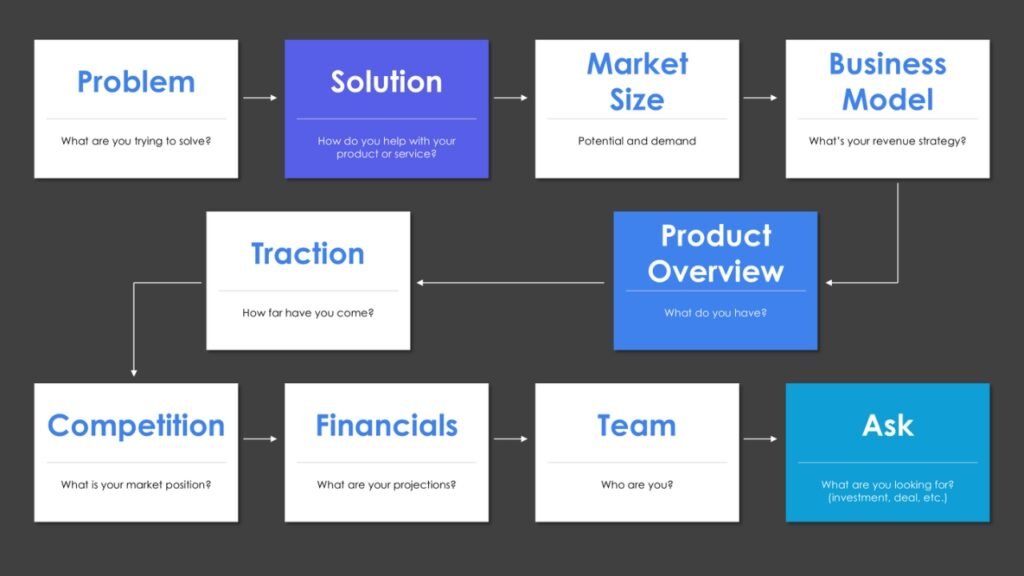
Most pitch decks have a similar layout comprising of 10-15 slides.
Common sections are:
- Problem – What are you trying to solve?
- Solution – How do you help with your product or service?
- Market Size – Potential and demand
- Business Model – What’s your revenue strategy?
- Product Overview – What do you have?
- Traction – How far have you come?
- Competition – What is your market position?
- Financials – What are your projections?
- Team – Who are you?
- Ask – What are you looking for? (investment, deal, etc.)
What is the Appropriate length of a Pitch Deck?
A pitch deck must be succinct and to the point.
- Target length: 10 – 15 slides.
- Target presentation length: 10 – 15 minutes.
The goal is to be simple, and keep it impactful, while avoiding the mundane .
Common Pitch Deck Mistakes
Many people reduce the impact of their pitch by making these mistakes:
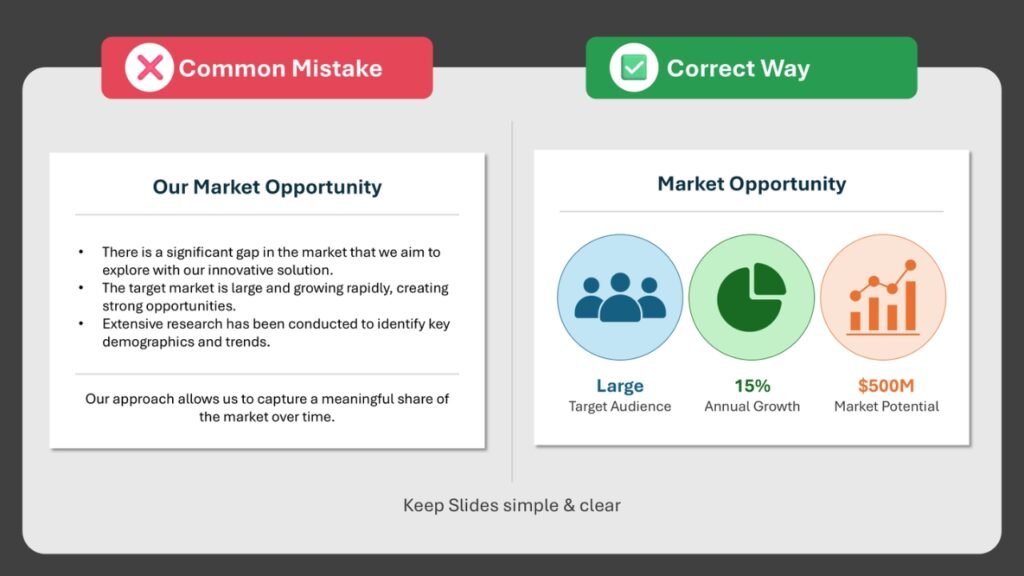
- Adding too much text
- Using complicated language
- Poor slide design
- No clear story or flow
- Missing key information
Just avoiding these mistakes can start improving the quality of your presentations.
Expert Insight
There is something I have noticed with years of designing presentations:
Pitch decks that have simplicity and structure are better than those with complexity
When it comes to persuading an audience the most important thing is clarity, not creativity.
Explore Ready-to-Use Pitch Deck Templates
To create a more professional looking presentation in less time, you can use templates.
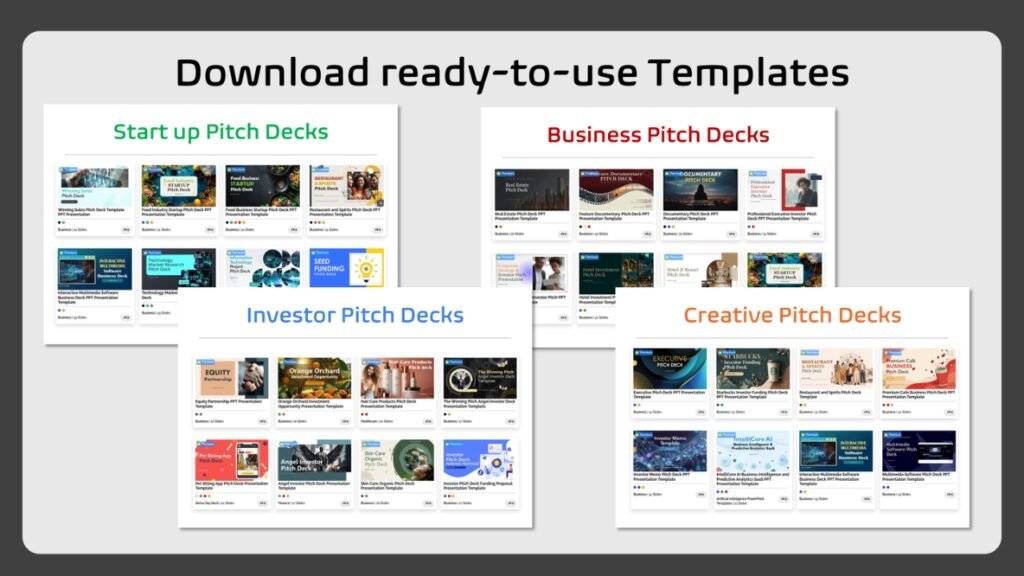
Explore Our Popular Pitch Deck Templates

A complete deck to explain the market opportunities, trends, and strategies on how to present tech adoption to potential investors.
Ideal for software start-ups, this deck provides an overview of the features, user experience, and possible development of multimedia applications.
Purpose-built for early-stage start-ups looking to raise seed funding, addressing the problem, solution, market opportunity, and funding gaps.
Provides emphasis on traction, projected growth, and team experience to attract angel investors.
A clear and professional deck for presenting partnership opportunities and investment terms to potential partners.

Focused on organic skincare brands, this deck showcases product benefits, brand story, and market potential.

A fully loaded template to capture the attention of angel investors, employing data-driven story-telling and well-designed graphics on each slide.

Another option for skincare start-ups, focusing on the use of organic ingredients, market positioning, and the ability to attract investors.
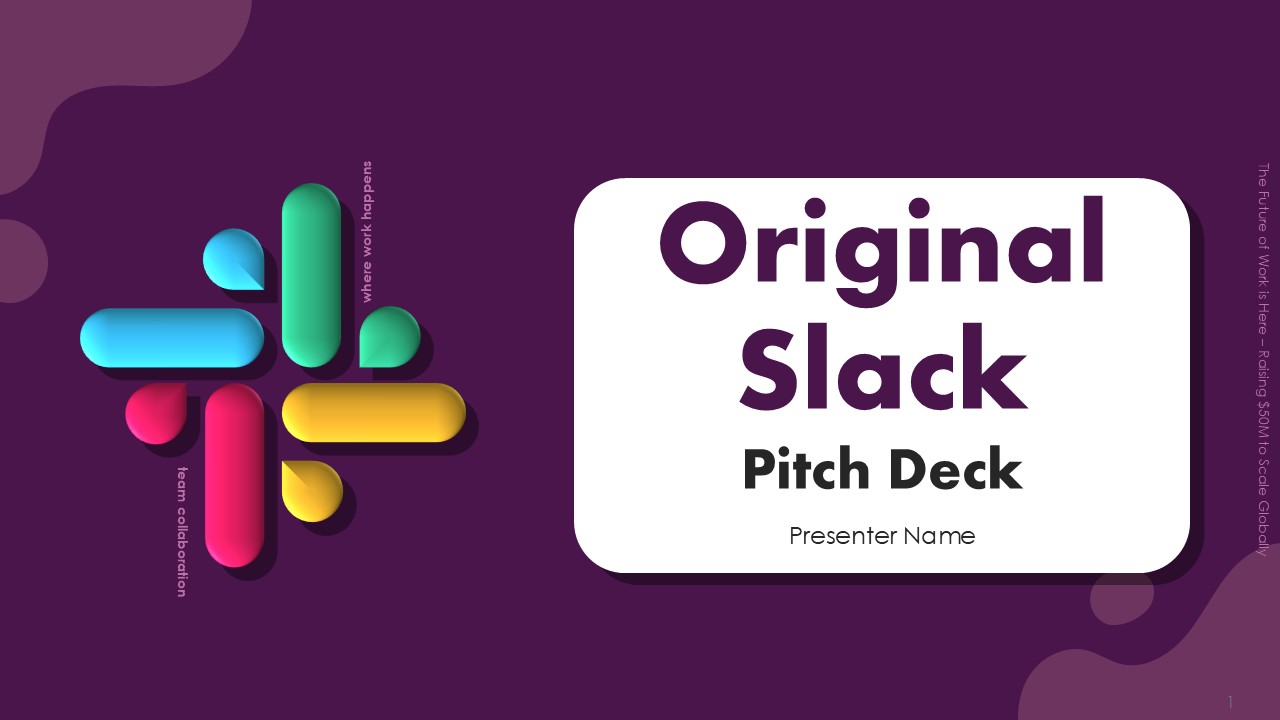

Inspired by popular tech startups, this deck highlights team collaboration tools, product growth, and investment potential.
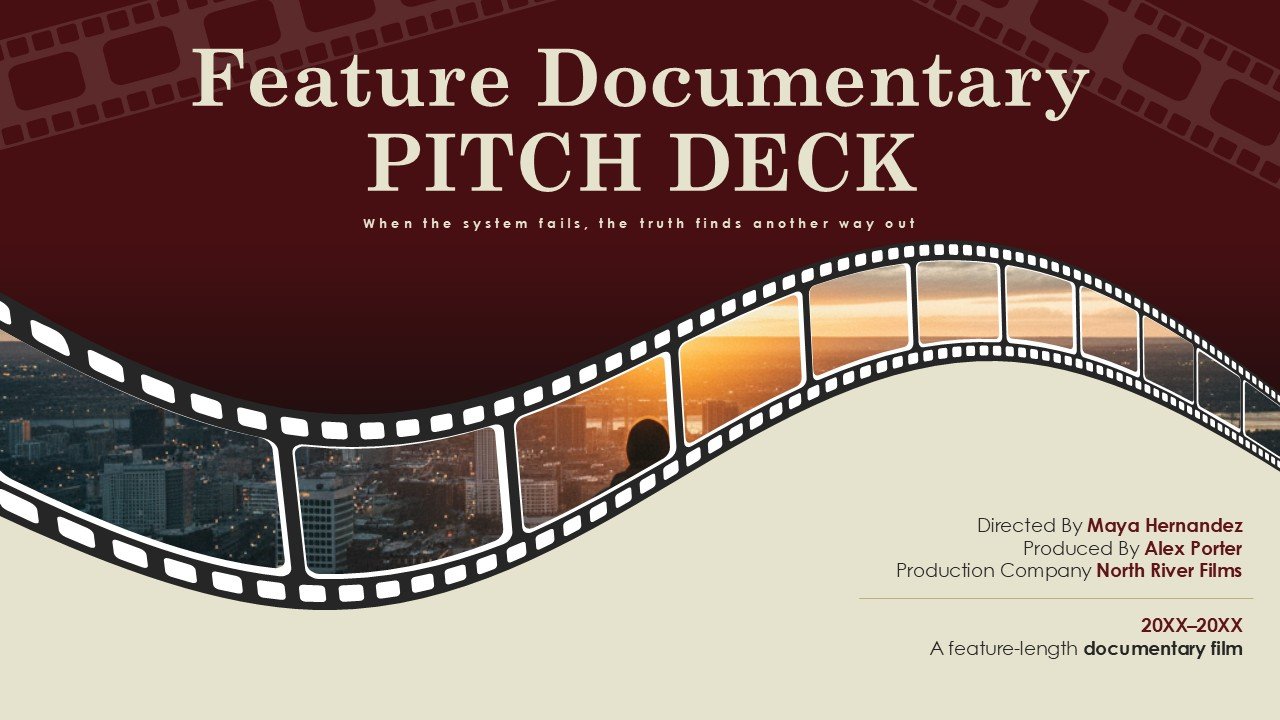
Ideal for film producers, this deck outlines the story, production plan, and financial projections for documentaries.

This deck is intended for hospitality projects and outlines the investment opportunity, occupancy estimates, and expected ROI.
For cafe entrepreneurs, this template focuses on business concept, revenue strategy, and expansion opportunities.
Ready to turn your pitch deck into a money-making machine?
Most pitch decks don’t fail due to the idea being bad. Most pitch decks fail due to some combination of a bad design, a lack of a clear story, and a lack of a clear message that resonates with the investors.
That is where we come in.
With over 20+ years of experience in presentation design, we don’t just “design slides”—we help you craft a pitch that is clear, compelling, and built to convert.
Here’s what we offer:
- Strategic storytelling (not just visuals)
- Investor-focused structure
- Clean, high-impact design that builds credibility
- Fast turnaround and collaborative process
If you’re serious about raising funds or making a strong impression, let’s talk.
Book a free consultation call
Or send your current deck for a quick review
No pressure. Just clarity on how to improve your pitch.
FAQs (Frequently Asked Questions)
Q: What is a pitch deck supposed to accomplish?
A: A pitch deck should accomplish the goal of presenting a business idea in a clear manner and convincing the audience to take action.
Q: How many slides should be in a pitch deck?
A: A pitch deck should have approximately 10–15 slides, each of which presents important information about the business.
Q: Who is a pitch deck for?
A: A pitch deck is for startups, entrepreneurs, and businesses.
Q: Are business plans and pitch decks the same thing?
A: A business plan and pitch deck are not the same. A pitch deck is a short visual summary and a business plan is a long, detailed written document.
How To Build A Pitch Deck That Will Catch Investors Attention
A pitch deck expresses your story and your strategy. It also offers you the opportunity to convince an investor of your vision. A pitch deck is important, regardless of whether you are pitching for a startup idea, product, or business expansion.
What are the elements of a successful pitch?
- Determine your goal.
Before opening the design tools, think about what you want to accomplish with this pitch.
Is this to secure funds? Obtain a business partner? Get early users?
Each goal should have a separate deck. Investors need guidance, in addition to information.
- Develop a strong opening.
The initial slide should grab the most attention.
This usually contains:
Company Name
Company tagline
An organized and beautiful layout
A simple and straightforward impression is key.
- Focus On The Problem
This is where the relatability factor is created.
What is the problem?
Who is affected?
Why does this matter?
If the investors do not relate to the problem, they will not be interested in the solution.
- State Your Solution
After identifying the problem, you can present the solution.
You can explain:
– What you have created
– The way it solves the problem
– What makes it better than other solutions
Stick to simplicity. Your audience doesn’t want to be bogged down by technical details.
- Show Market Opportunity
Before anything else, this problem must be clearly defined. Investors want to assess their potential return so understanding the scale of the idea and its growth opportunity is essential. Outline potential market size, target audience, and growth potential to illustrate opportunity using simple visuals or numbers.
- Clarify Your Business Model
Explain how you intend to generate revenue and clearly outline revenue streams, pricing, and sales strategies. The less detail the better below the level of clear and concise. If it takes the reader over one minute to consider revenue generating potential then you have over complicated the description.
- Show traction
To build credibility you will need to show user/revenue growth, key milestones or partnerships, and even the smallest of achievements. Keep the data and detail focused on positive outcomes.
- Meet Your Team
Investors buy the team as much as the idea. Be sure to Include the founders and core team and their relevant experience and why this team is best to execute this idea which is the core of the business. Keep it tight and solid.
- Share Your Go-To-Market Strategy
Explain your growth plans using:
\- Marketing channels
\- Customer acquisition strategies
\- Sales plans
This shows you’re not just building you know how you’ll get users.
- Discuss Competition
Every business has competition. The biggest mistake you can make is ignoring it.
Instead:
– Acknowledge your competitors
– Illustrate how you’re different
– Highlight your unique advantages.
This will help you define your position in the market.
- Financials & Forecasts
Be realistic with your numbers in regard to:
– Revenue projections
– Costs
– Expected growth
Investors would rather not have false promises.
- End With A Strong Ask
Conclude your deck with:
– The amount of funding you need
– What you will use it for
– The outcomes you expect from it
Being specific and certain helps the investors to agree to your deck.
Improvement Ideas
– Use consistent fonts and colors
– Make your slides simple
– Focus on the most important info
– Use visuals, avoid long texts
A pitch deck should be simple to remember and easy to read.
The last piece of the puzzle
A pitch deck should not only display information but also tell a captivating story. The deck should guide the audience through the problem, suggest a practical solution and finally explain why your team is best suited to resolve the issue.
It will be expressively appreciated if you keep your message clear and focused. If your story is true and your message is strong, your pitch deck will achieve its purpose.