
Presentation on the Impact of AI on Healthcare: Step by Step Guide

Are you bustling to craft a presentation on the impact of AI on the healthcare industry? To deliver a comprehensive presentation, it is essential to understand the structure of the content, concept, ideology, briefing, infographics, charts, and themes. Beyond basic presentation knowledge, you need to understand the core slides and templates concepts. If it sounds arduous to design a presentation on the impact of AI on healthcare, this is the right place to understand. Let’s dive in.

Step-by-Step Guide

Start by selecting the slide numbers. Always follow simple math for crafting a presentation, minimal 10-15 slides and a lot of white spaces. This gives readers a hook to stay till the end in your presentation. Do not overpower with word jargon as it will make your presentation too noisy to read and understand. 

Slide 1: Title Slide (Artificial Intelligence AI in Healthcare Presentation)

The foremost and obvious slide is “title slide”. When designing a title slide, keep it simple and enticing followed by a sub-title. A subtitle will provide generic information on what ideas and concepts you are going to share in the presentation. Use exciting infographics and images along with titles to make it catchy. Below is the prompt for the title slide which we have added to show how the title slide should look like. 

Subtitle: Reshaping Diagnosis, Treatment, and Operations

Your Name


Date

Artificial Intelligence AI in Healthcare Presentation

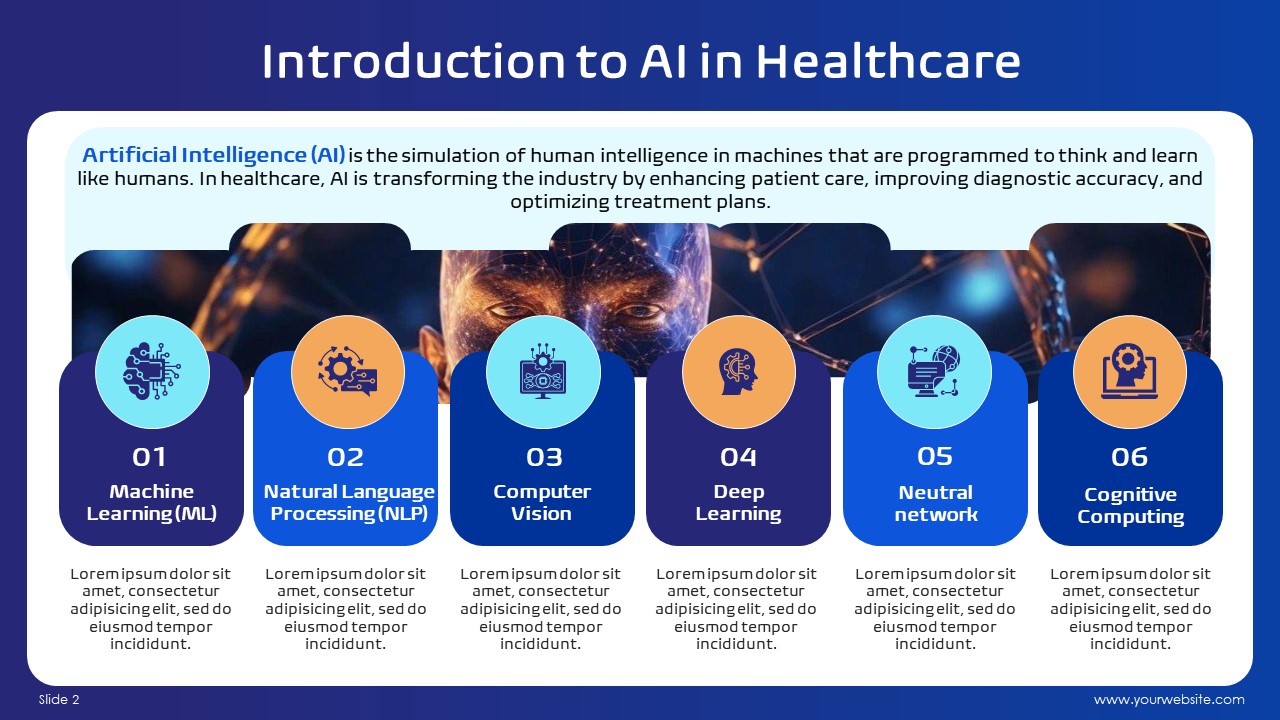
Slide 2: Introduction Slide

Well, it has to be robust and catchy enough to grab the attention of the viewers. When writing an introduction, mark it first by a question and then answer.

Artificial Intelligence AI in Healthcare Presentation

The slides rule is simple, keep the introductory statement simple yet informative. Do not crowd the words. Add a lot of white space. 

  • What is AI in Health? Mark the question first and then answer with simple definition. 
  • Why is AI Rising? Explain in two liners about the key role and reason of adapting AI in healthcare industry.
  • The Central Theme. AI is not replacing doctors but rather augmenting their capabilities to improve accuracy, speed, and patient care. 

Above we have postulated the demo slide how your slides looks when you add the content.
Slide 3: Mark the Role of AI in Clinical Diagnostics

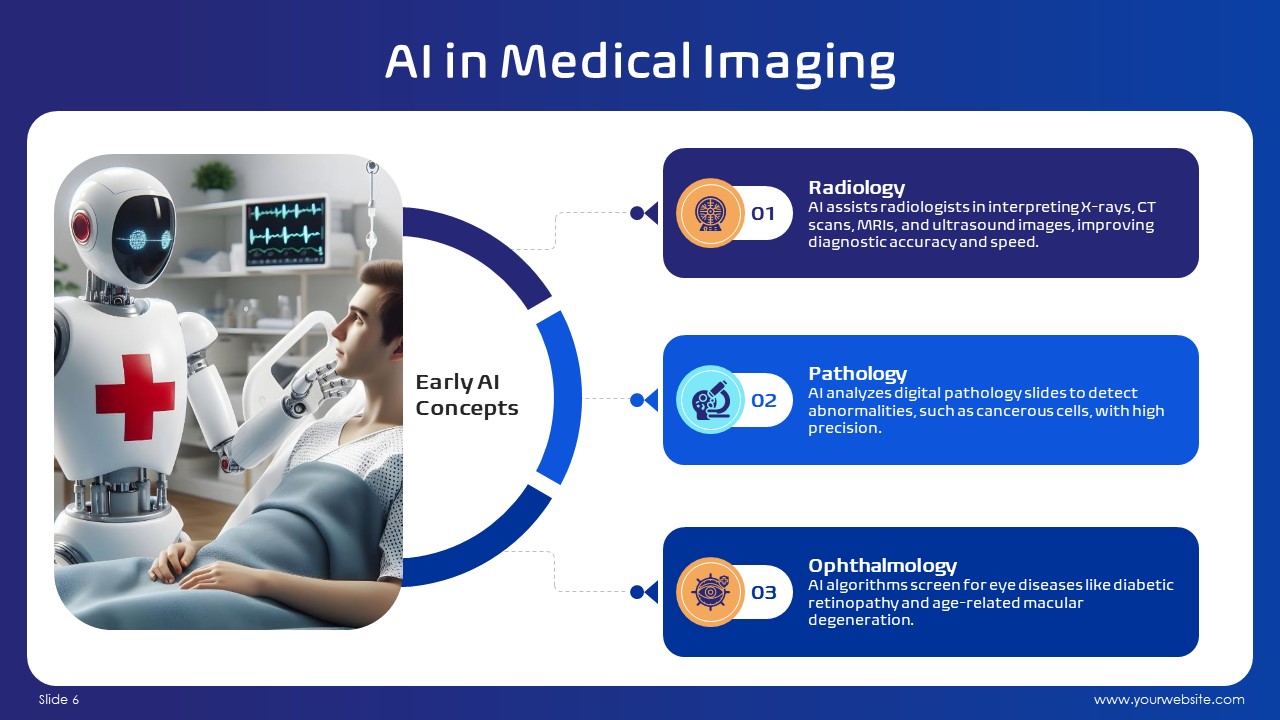
The third slide should explain the key role of AI in healthcare industry. Note that the very obvious role of AI is in clinical diagnostics.

Artificial Intelligence AI in Healthcare Presentation

 In addition, you need to know while explaining diagnostic ability of AI, make bullet list and explain the role.

  • Medical imaging analysis: AI algorithms, such as machine learning can analyze data collected from the X-rays, CT scans, and MRIs. This is useful to detect tumors, fractures, and other conditions with high accuracy.
  • Pathology: AI-driven analysis is very useful to analyze tissue samples in real-time. It also helps to identify malignant and pre-cancerous cells more quickly and accurately.
  • Dermatology: AI-powered tools and smartphone apps can analyze skin lesions and rashes to detect conditions like melanoma, supporting early diagnosis. 

Slide 4: AI and Personalized Treatment Plan

When writing a presentation on the impact of AI on healthcare, do not forget to add personalized treatment plan. Ai is widely adopted to analyze genomic data and precision medicine development. Keep the pointers simple and easy to understand. 

  • Genomic analysis: AI analyzes a patient’s genetic information to tailor treatment plans, especially in oncology, where it can identify mutations and biomarkers.
  • Therapeutic drug monitoring: Machine learning models predict drug-drug interactions and adverse reactions, helping to optimize medication dosages for individuals.
  • Precision medicine: By analyzing large datasets of patient characteristics, AI can predict the most effective interventions for a specific individual, minimizing side effects. 

Slide 5: Role of AI in Surgical Planning / Procedures

The fifth and obvious slide is the role of AI in surgical planning / procedures. This slide must explain how the AI is integrated in healthcare for surgical planning and performing robotic assisted surgeries. Again, keep the elements minimal and basic. Cover information in about 20-30 words in each row. 

  • Robotic-assisted surgery: AI-powered robotic systems, such as the da Vinci Surgical System, increase surgical precision and control, leading to smaller incisions and faster recovery times.
  • Automated tasks: Robots can perform repetitive surgical tasks, such as suturing, with higher accuracy and less fatigue than humans.
  • AI-guided systems: AI can enhance a surgeon’s display with real-time data and imagery, providing guidance during image-guided therapies. 
Artificial Intelligence AI in Healthcare Presentation

Slide 6: Streamline Administrative Tasks

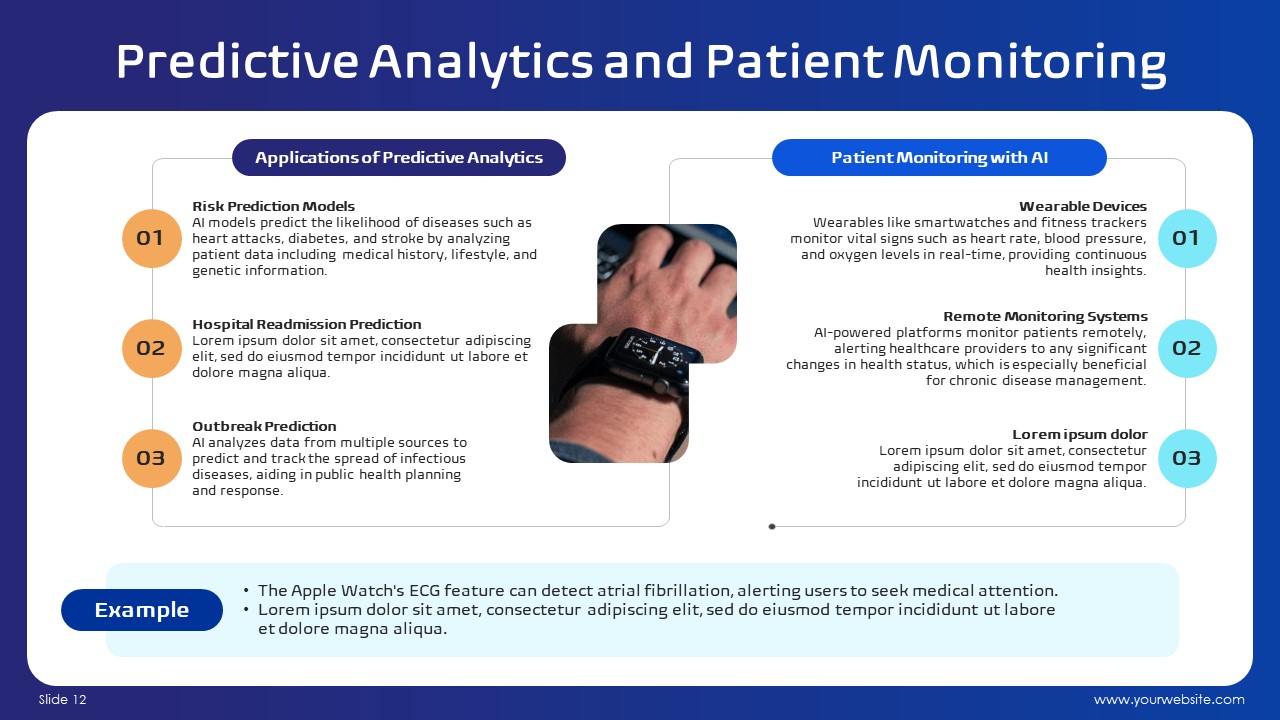
In the sixth slide, you should explain about the predictive and automating capabilities of AI in streamlining the administrative tasks. Again, the rule here is simple, keep your bullet list simple and informative. Do not forget to add some hint about the potential and uses of AI in handling medical tasks. An example of how you can draft this slide. 

  • Predictive analytics: AI predicts patient admission rates, allowing hospitals to optimize resource allocation, staffing, and bed management.
  • Automating administrative tasks: AI-powered tools streamline functions like medical billing, claims processing, and electronic health record (EHR) management, reducing costs and freeing up staff time.
  • Virtual health assistants and chatbots: These tools provide 24/7 patient support, help with appointment scheduling and prescription reminders, and offer preliminary symptom assessments. 
Artificial Intelligence AI in Healthcare Presentation

Slide 7: Explain the Future of AI in Healthcare

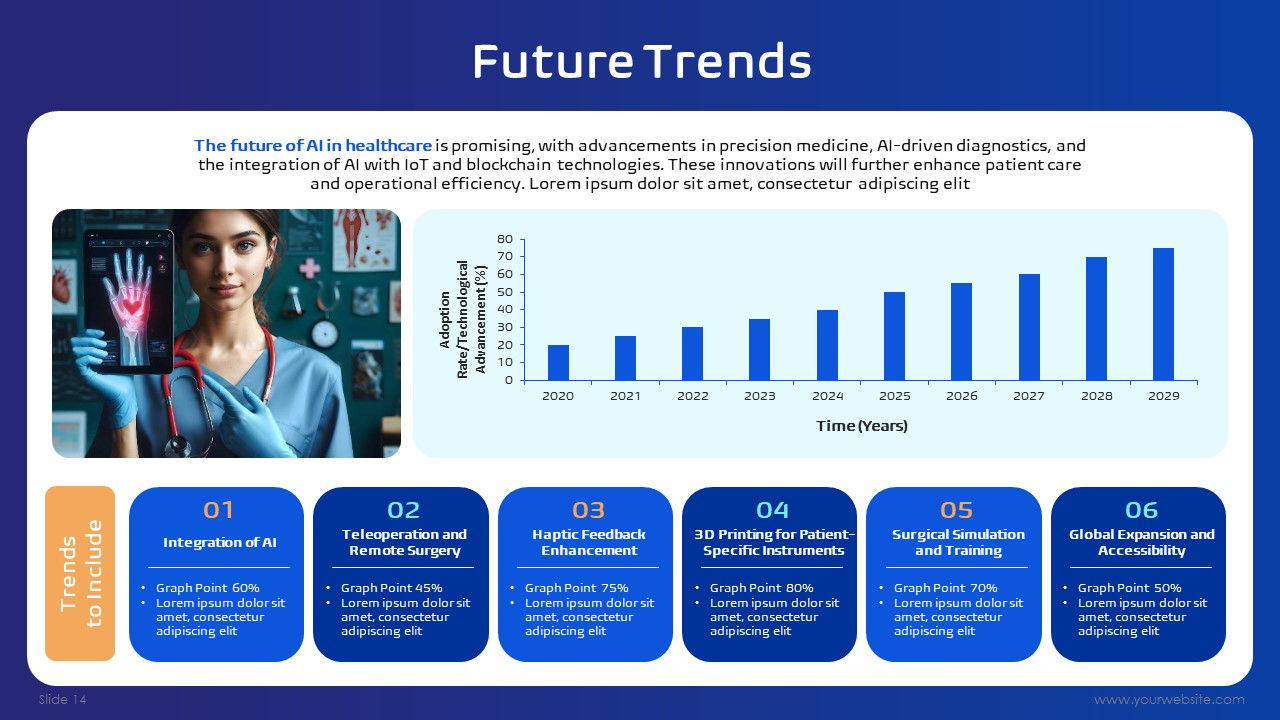
Last but not least, add a little information about the broad future of AI in healthcare. This will help to keep your audience engaged for future driven information. Make sure to highlight the concept of personalization and collaborative systems.

  • Enhanced personalized medicine: Integrating AI with genomics and real-time monitoring will lead to increasingly tailored and proactive healthcare interventions.
  • Preventive medicine: AI will predict individual disease risk based on genetic data and lifestyle factors, enabling earlier intervention and prevention.
  • Collaborative systems: Collaborative AI that works alongside healthcare professionals will enhance clinical decision-making and patient care.

Addressing global disparities: AI-powered diagnostics and telemedicine can expand access to quality care in underserved and remote areas.

Artificial Intelligence AI in Healthcare Presentation

Slide 8: Concluding Note

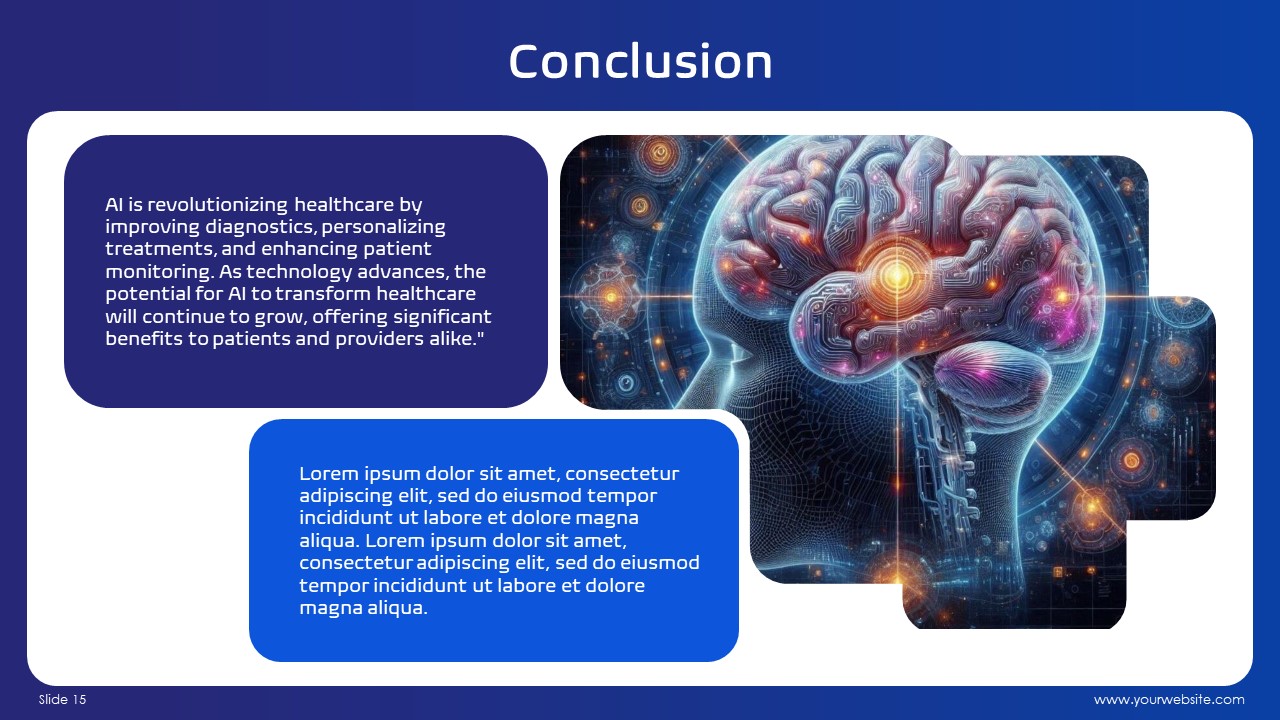
In the end, mark a concluding note where you explain that AI is here to improve healthcare outcomes. It creates a harmony in information analysis and treatment planning. With continued collaboration, AI can improve patient outcomes, enhance efficiency, and create a more personalized and sustainable healthcare system for all.

Concluding

Creating a presentation on the impact of AI on healthcare is not complex if you follow the right approach mentioned above. If you still have doubts and are not sure how to draft a presentation on healthcare, use AI-powered healthcare presentation templates from Slidesbrain. This AI-powered presentation not only helps to draft a presentation but also suggests the content ideas and how your presentation looks like. Visit our website today and use automated slides to design the most impactful presentation in minutes.

Shopping Cart