Pitch Deck Templates: Best Designs For Startups to Raise Funding in 2026
In 2026, the landscape for startup fundraising continues to be highly competitive. Investors are now presented with thousands of pitch decks each quarter, and only those that are the most engaging, meticulously structured, and thoughtfully planned manage to stand out. A successful pitch deck does more than merely convey information; it also persuades, narrates a compelling story, and enables investors to envision the potential you are creating.
This comprehensive article addresses everything you need to understand about pitch deck templates, including their definition, the significance of design, the templates currently favored by founders, and strategies for crafting a successful deck within the 2026 ecosystem.
What a Pitch Deck Is and Why Does It Remain Essential?
A pitch deck is a visual presentation that outlines your organization’s objectives, products, progress, business strategy, and funding requirements. Typically, it consists of 10 to 20 slides. This presentation is often the initial introduction investors have to your business and serves as the basis for more detailed discussions in the future. Pitch decks continue to be important because of the following aspects:
- Provide a succinct and clear description of your value proposition.
- Chronicle your startup’s journey in a coherent manner.
- Emphasize traction and indicators that bolster investor confidence.
- Act as a takeaway document following meetings.
- In 2026, as companies increasingly utilize AI, data analytics, and global markets, pitch decks will evolve to reflect both rigorous standards and robust branding.
Essential Components of a Successful Pitch Deck (The Slide-by-Slide Structure)
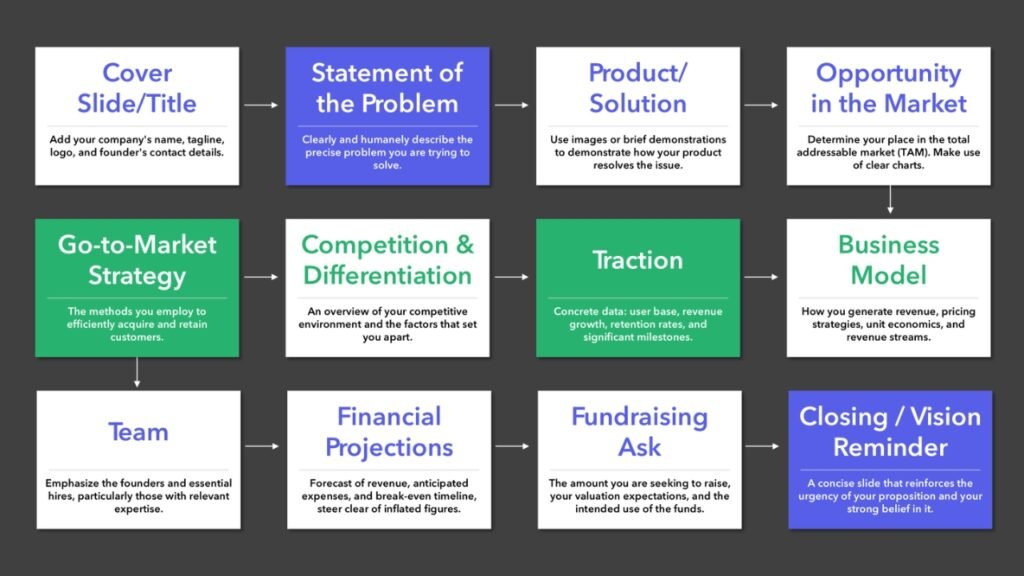
The following slides are included in the most successful pitch deck templates . These operate in various funding stages and industries:
- Cover Slide/Title: Add your company’s name, tagline, logo, and founder’s contact details.
- Vision, Story, and Hook: What audacious future are you constructing? Your initial emotional bond is this one.
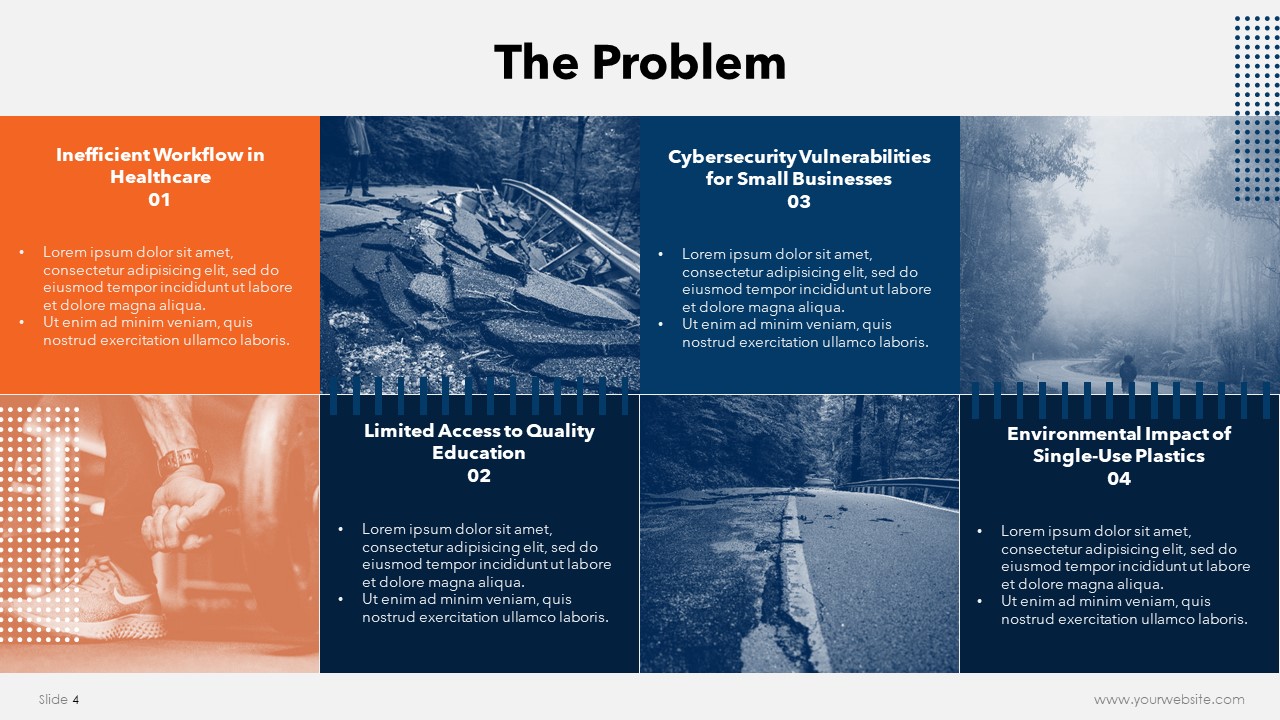
- Statement of the Problem: Clearly and humanely describe the precise problem you are trying to solve.
- Product/Solution: Use images or brief demonstrations to demonstrate how your product resolves the issue.
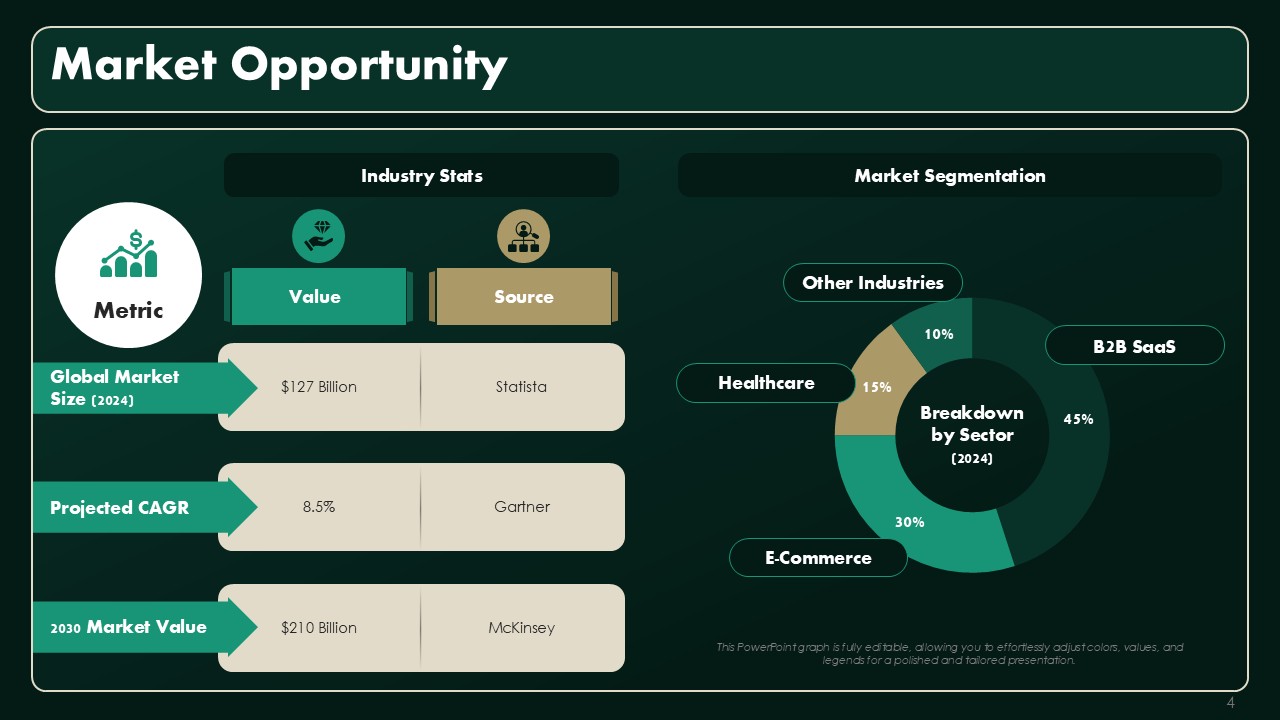
- Opportunity in the Market: Determine your place in the total addressable market (TAM). Make use of clear charts.
- Business Model: How you generate revenue, pricing strategies, unit economics, and revenue streams.
- Traction: Concrete data: user base, revenue growth, retention rates, and significant milestones.
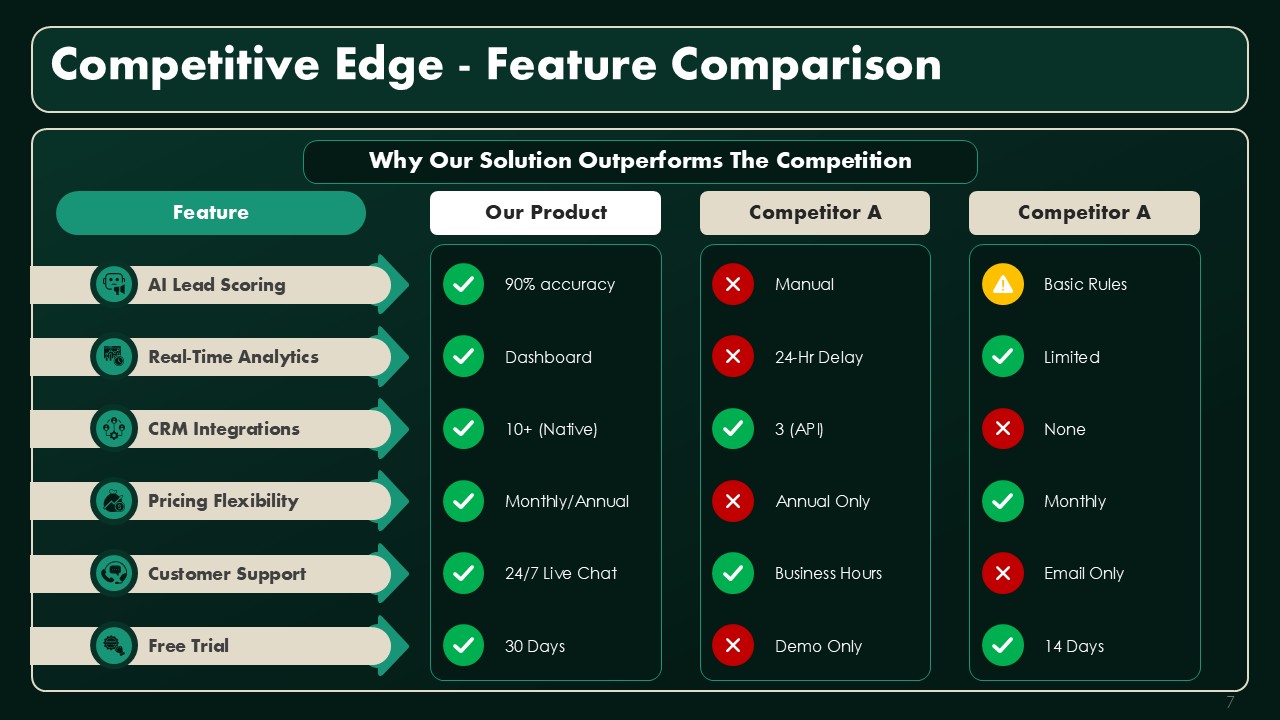
- Competition & Differentiation: An overview of your competitive environment and the factors that set you apart.
- Go-to-Market Strategy: The methods you employ to efficiently acquire and retain customers.
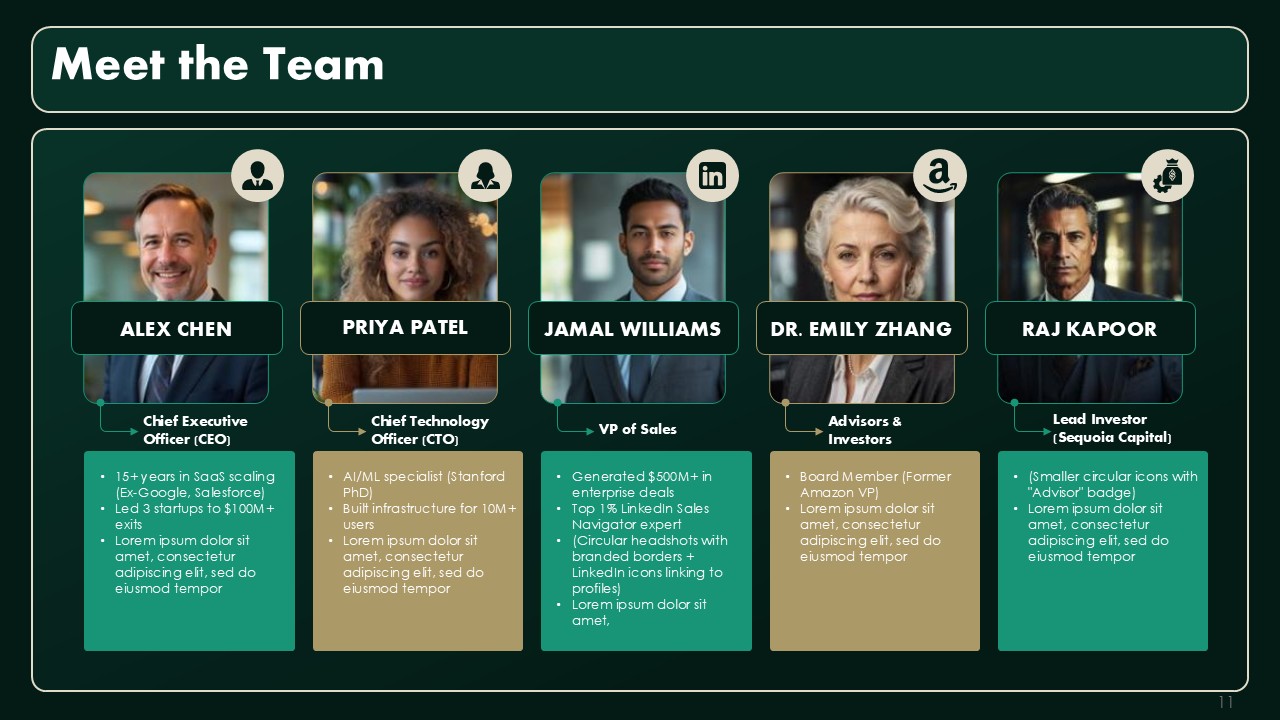
- Team: Emphasize the founders and essential hires, particularly those with relevant expertise.
- Financial Projections: Forecast of revenue, anticipated expenses, and break-even timeline, steer clear of inflated figures.
- Fundraising Ask: The amount you are seeking to raise, your valuation expectations, and the intended use of the funds.
- Closing / Vision Reminder: A concise slide that reinforces the urgency of your proposition and your strong belief in it.
Templates for Pitch Decks You Should Know
In 2026, generic designs will no longer be sufficient for startups. Founders are instead using investor-proven templates that strike a balance between convincing narrative, design, and clarity:
This template, which was created by one of the most well-known venture capital firms in the world, focuses on problem → solution → traction → growth flow. For many investors, it’s practically the gold standard format.

For early-stage businesses concentrating on product-market fit, finance, and early traction indicators, finance highlights pitch deck presentation template is ideal. It is straightforward and data-driven. It is especially effective for tech and software models.

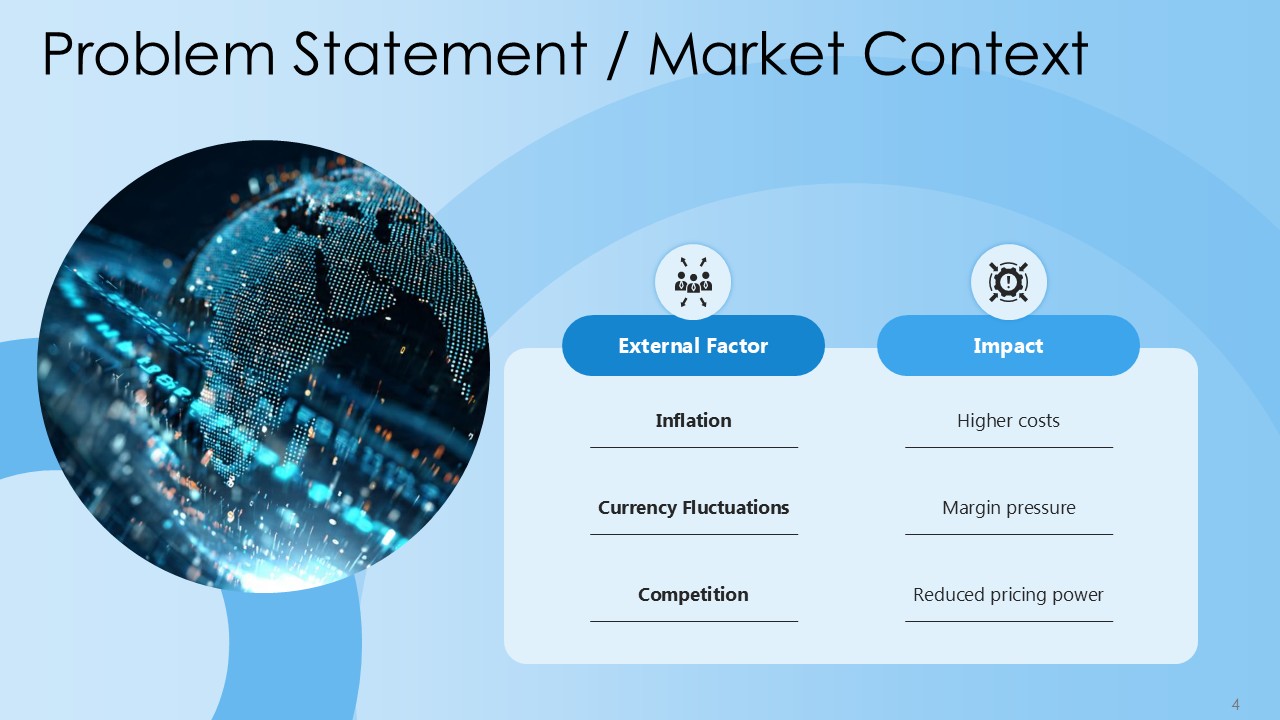
Very well-liked as a succinct, less-is-more format (~10 slides). Excellent when you want maximum impact and rapid clarity. This is ideal for presenting content in front of seed fund raisers and investors.

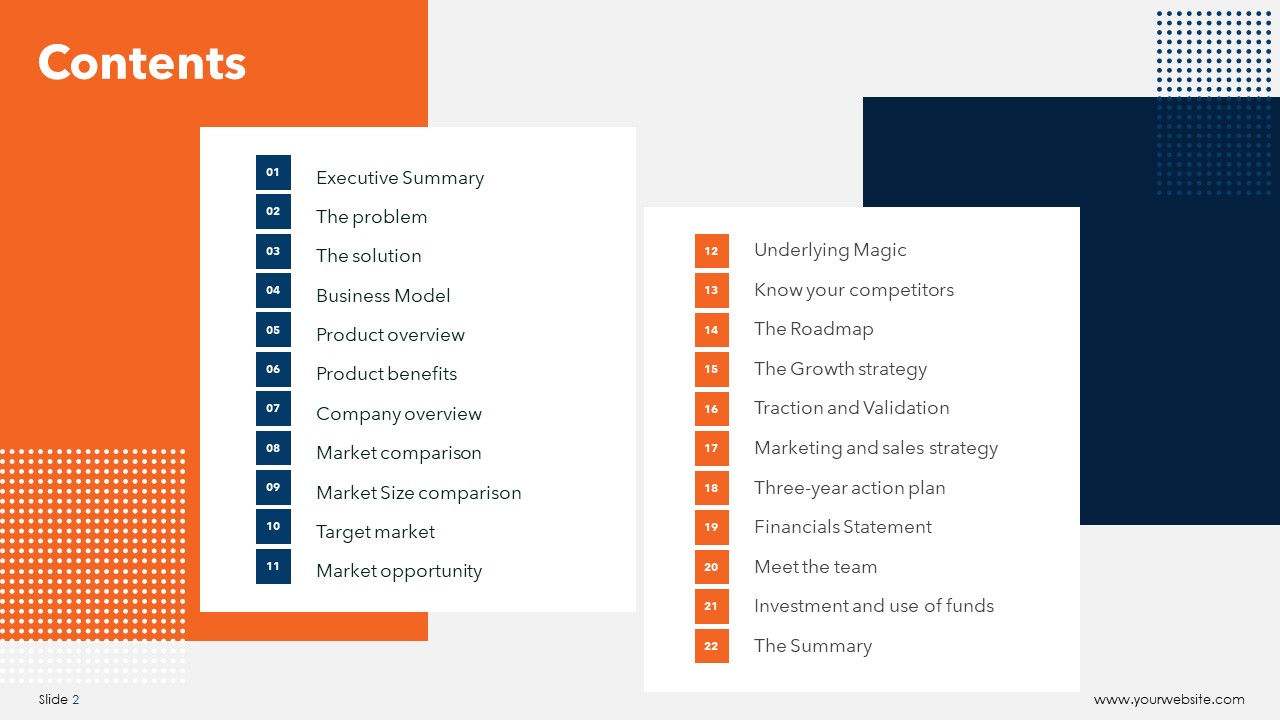
This template, which emphasizes growth measures and investor-relevant KPIs, was created for follow-up investor discussions.

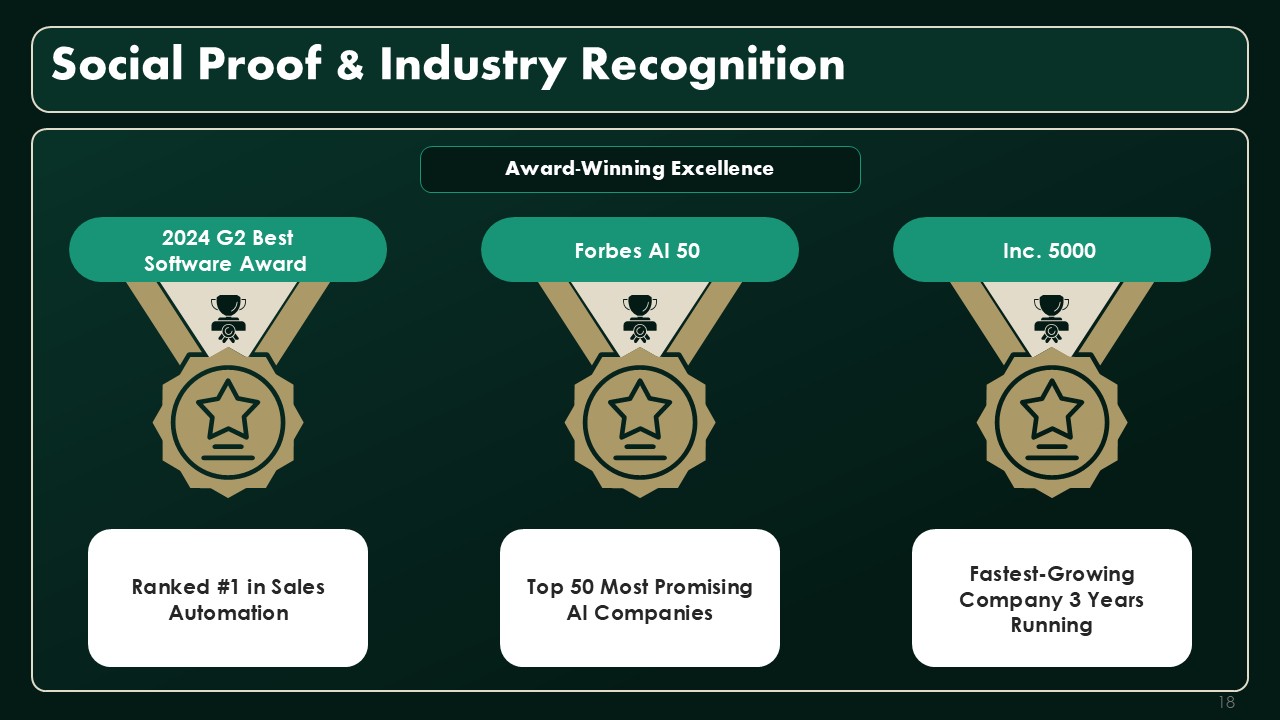
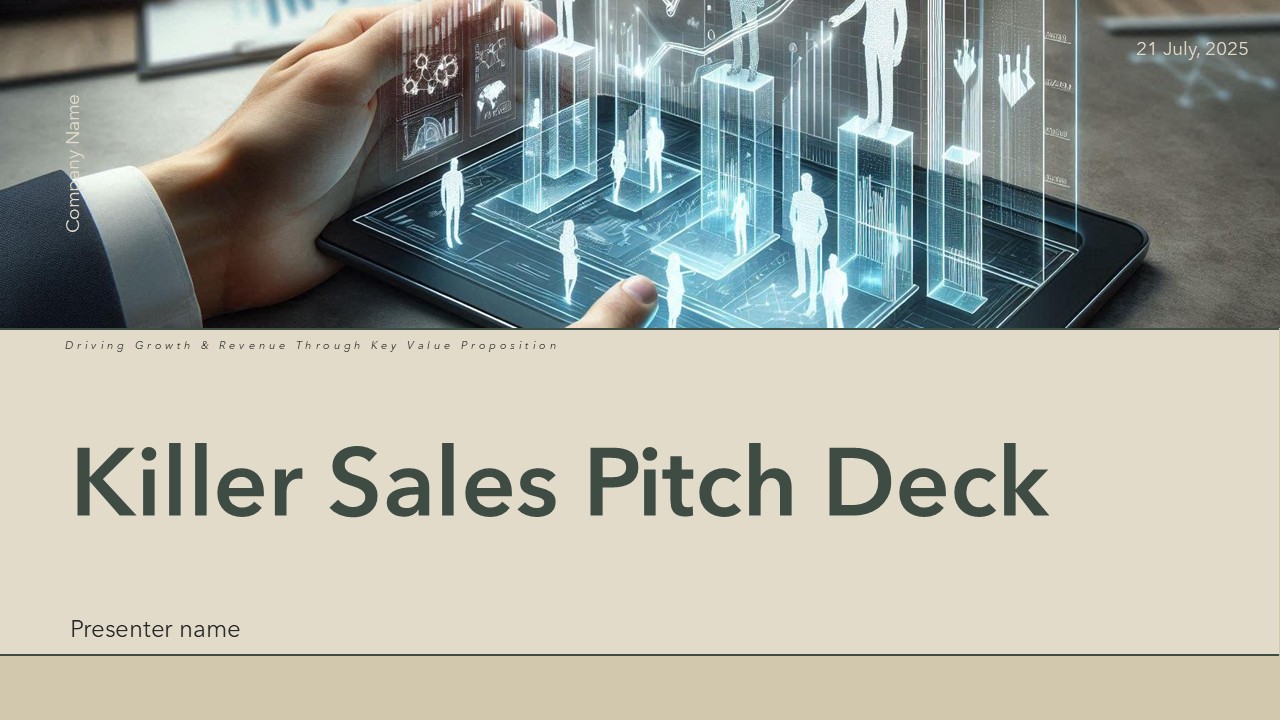
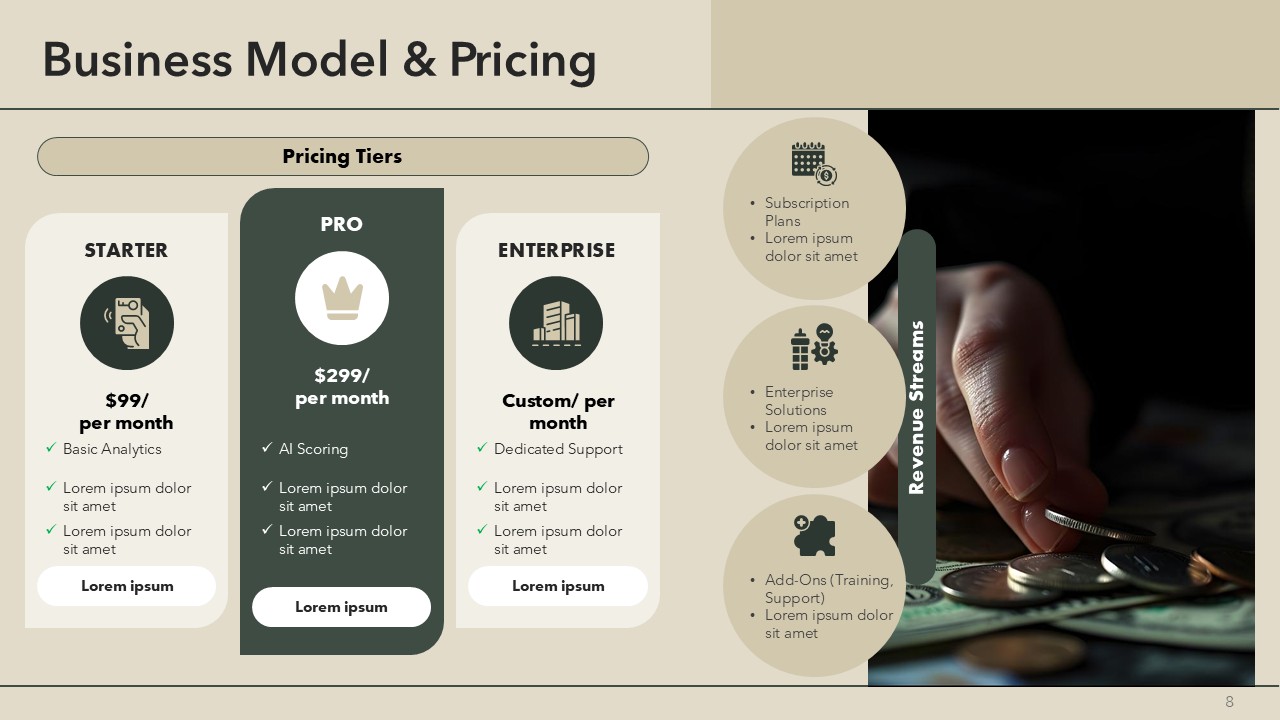
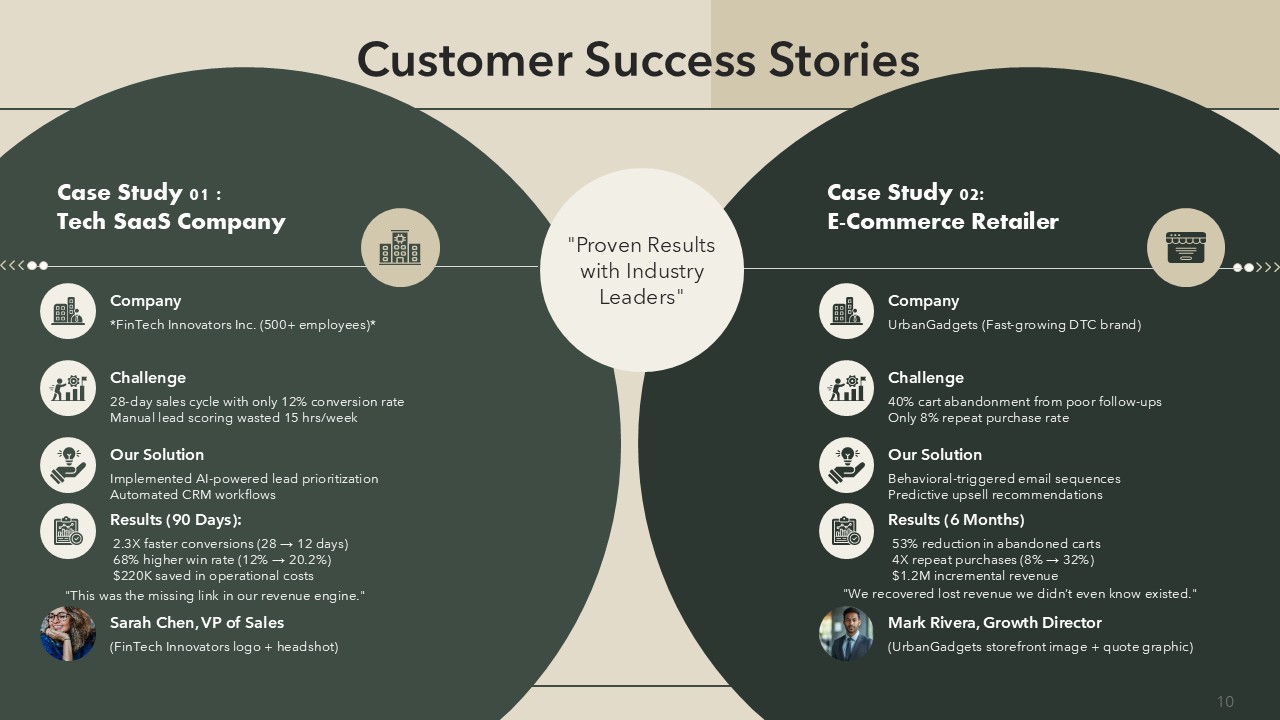

Pitch Deck Design Trends (2026)
In 2026, startups are combining style and usefulness. The following are the main design trends to think about:
Simple, Clear Layouts: Steer rid of clutter; each presentation should provide a clear response to one question.
Personalized Fonts & Brand Identity: Now that custom typography conveys attention to detail, your deck will stand out without being ostentatious.
Interactive Components: Including interactive elements in your deck, such as clickable charts or linked demos, can increase investor interest and make it stand out.
Visualization of Data: Graphs, charts, and other visual aids are now required rather than optional. Instead than just reading it, investors want to see traction.
Story-Based Slide Titles: To add meaning and urgency, replace generic headlines like “Market” with narratives like “Why the Market Is Finally Ready for Us.
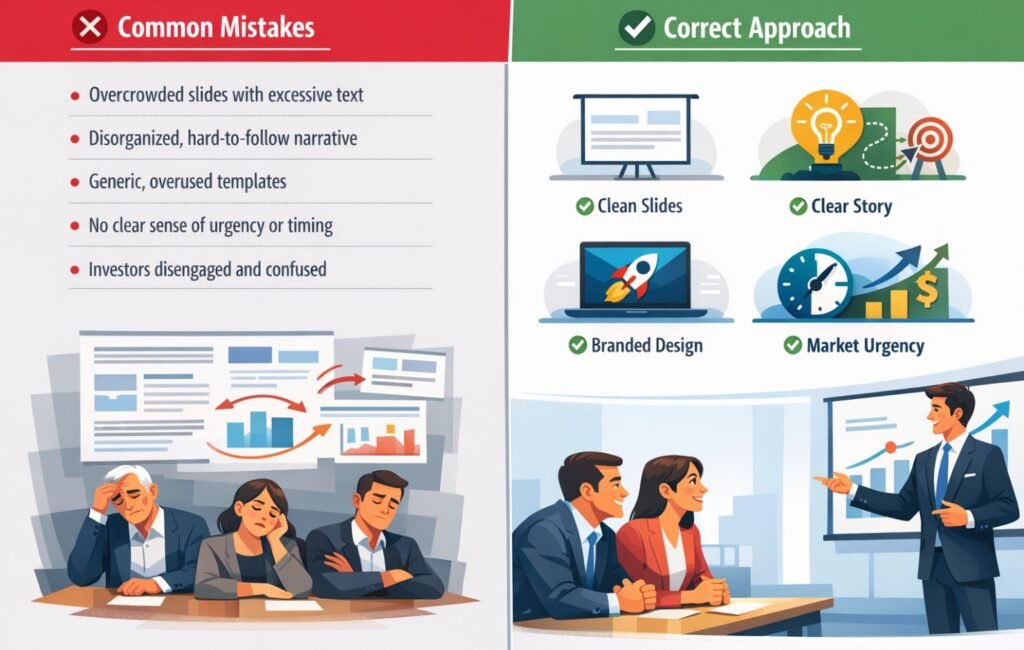
Steer Clear of These Typical Errors: Errors can ruin your pitch even if you have a solid template:
- Excessive text on slides makes decks difficult to skim.
- Inadequate narrative flow: If the rationale seems jumbled, investors become disinterested.
- Uncustomized generic templates make plywood decks appear unoriginal and templated.
- Ignoring market timing can lessen perceived urgency if the reason is not addressed right away.
SlidesBrain: A Prominent Platform for Creating Pitch Decks
More and more founders are utilizing SlidesBrain to design robust presentations. Each of the templates point out that templates are useful, the message and delivery are what really count; a unique appearance cannot take the place of an engaging tale delivered with passion.
Concluding Remarks
Pitch decks are still among the most crucial tools in a startup’s fundraising toolbox in 2026. The greatest templates do more than just look good; they support the telling of a real, data-driven narrative that appeals to investors.
Instead than using templates as a crutch, use them as a framework. Create a story that makes your startup’s mission seem exciting and inevitable, tailor each slide to your company’s strengths and trajectory, and support assertions with evidence.
Ready to turn your pitch deck into a money-making machine?
Most pitch decks don’t fail due to the idea being bad. Most pitch decks fail due to some combination of a bad design, a lack of a clear story, and a lack of a clear message that resonates with the investors.
That is where we come in.
With over 20+ years of experience in presentation design, we don’t just “design slides”—we help you craft a pitch that is clear, compelling, and built to convert.
Here’s what we offer:
- Strategic storytelling (not just visuals)
- Investor-focused structure
- Clean, high-impact design that builds credibility
- Fast turnaround and collaborative process
If you’re serious about raising funds or making a strong impression, let’s talk.
👉 Book a free consultation call –
👉 Or send your current deck for a quick review
No pressure. Just clarity on how to improve your pitch.